It’s late afternoon, you’ve spent hours in front of the screen and your neck feels like a tightly stretched rope. Your shoulders have crept up somewhere near your ears without you noticing. You rub the base of your skull and promise yourself that tomorrow you’ll sit “properly.” The truth is, your neck doesn’t need a perfect posture. It needs frequent, gentle movement.
Why your neck hurts at your desk
Your head is fairly heavy. When it stays slightly in front of your body for long stretches, the muscles at the back of your neck and in your shoulders work constantly to hold it up. It’s not so much the posture itself as how long you hold it: the same position, hour after hour, without a break. Add stress, shallow breathing and too little sleep to the mix.
The good news is that small, frequent movements throughout the day often make a noticeable difference.
Before you start
- Move slowly and within a range that feels comfortable. Don’t force the movement.
- A light stretch is fine. Sharp pain is not.
- Stop if the pain increases, or if you feel dizzy or notice numbness in your arms or hands.
- Breathe calmly throughout.
The 6 moves
1. Chin tuck
Sit tall, looking straight ahead. Gently draw your chin back, as if you were making a “double chin,” without tipping your head down. Hold for two breaths, then relax. Do 5–8 repetitions.
2. Gentle side bend
Let your right ear tilt toward your right shoulder, without lifting the shoulder. Stay there for a few breaths, then return to center. Repeat on the other side, 3–4 times per side.
3. Head turns
Slowly turn your head as if you were looking over your shoulder, only as far as feels comfortable. Return to center and continue to the other side. Do 5–6 calm repetitions per side.
4. Shoulder rolls
Lift your shoulders toward your ears, draw them back and let them drop loosely. Do 8–10 slow circles. It’s a simple way to “unstick” the area between your shoulder blades.
5. Seated chest opener
Sitting in a sturdy chair, rest your upper back against the top of the backrest and interlace your fingers behind your head. Gently lean back to open your chest, take a breath and return to the starting position. Do 5 repetitions.
6. Shoulder blades into your back pockets
With your arms relaxed by your sides, gently draw your shoulder blades back and slightly down, as if you were sliding them into your back pockets. Hold for two breaths, then relax. Do 8–10 repetitions.
“The best neck exercise is the one you’ll remember to do. Two minutes every hour often does more than half an hour once a week.”
Small changes at your desk
- Raise your screen to roughly eye level.
- If you work on a laptop, a stand and an external keyboard make a real difference.
- Set a reminder to get up regularly during the day.
- Take phone calls on your feet and walk around whenever you can.
When to ask for help
Most neck pain from desk work improves with movement and small changes. But do get a medical assessment if:
- the pain spreads into your arm, with numbness, tingling or weakness
- you have dizziness, vision problems, or difficulty speaking or swallowing
- the pain started after a fall or a car accident
- it comes with a fever or a severe headache that doesn’t feel like your usual ones
- it doesn’t improve within a few weeks, or it wakes you up at night
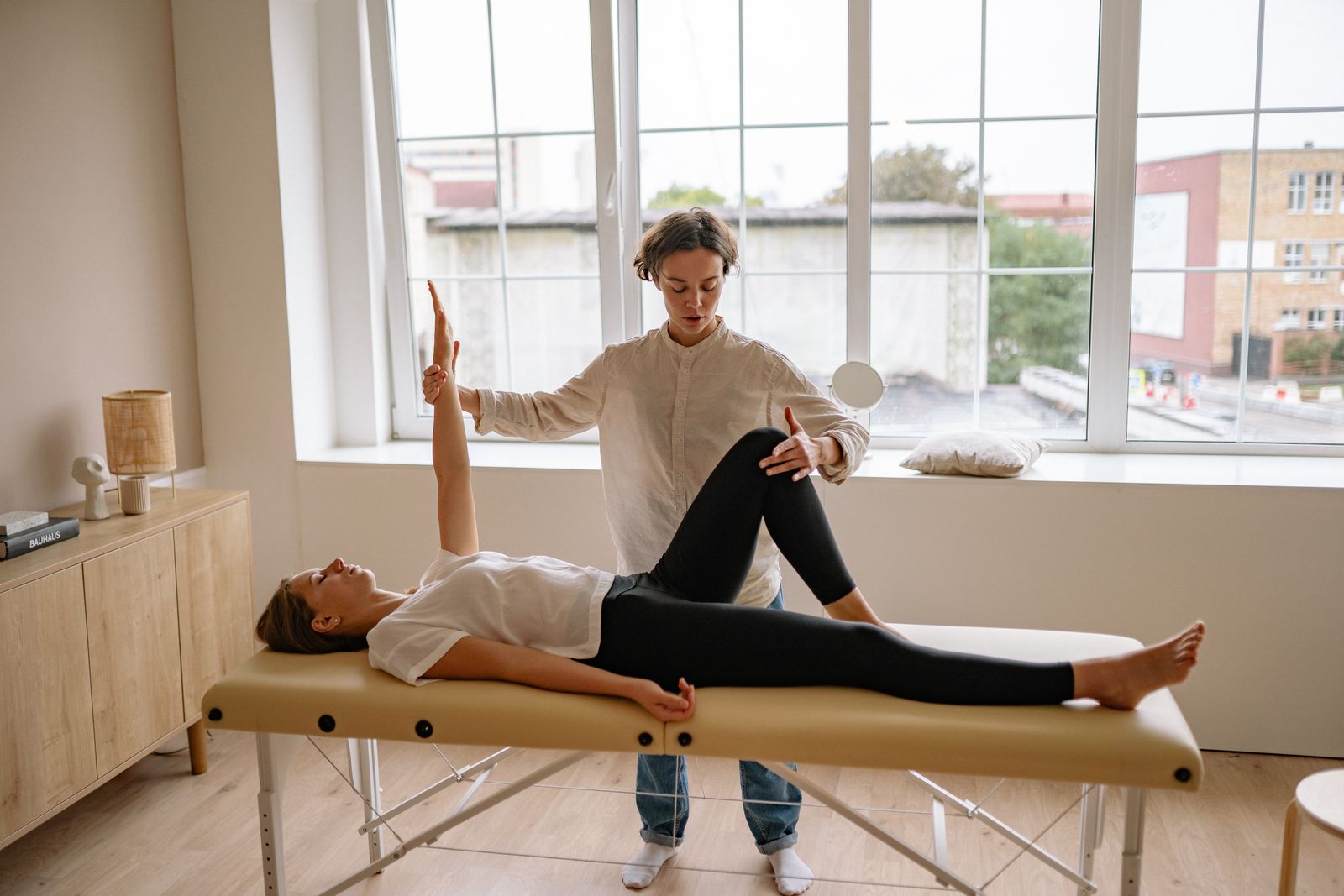
If your neck keeps bothering you, an assessment can show what’s putting strain on it in your own daily routine.
Book an assessment at Reset Lab and let’s build a plan for your neck together.
Related treatments
This content is for information only and does not replace diagnosis or assessment by a health professional. If your pain is severe, getting worse or comes with other symptoms, contact your doctor.